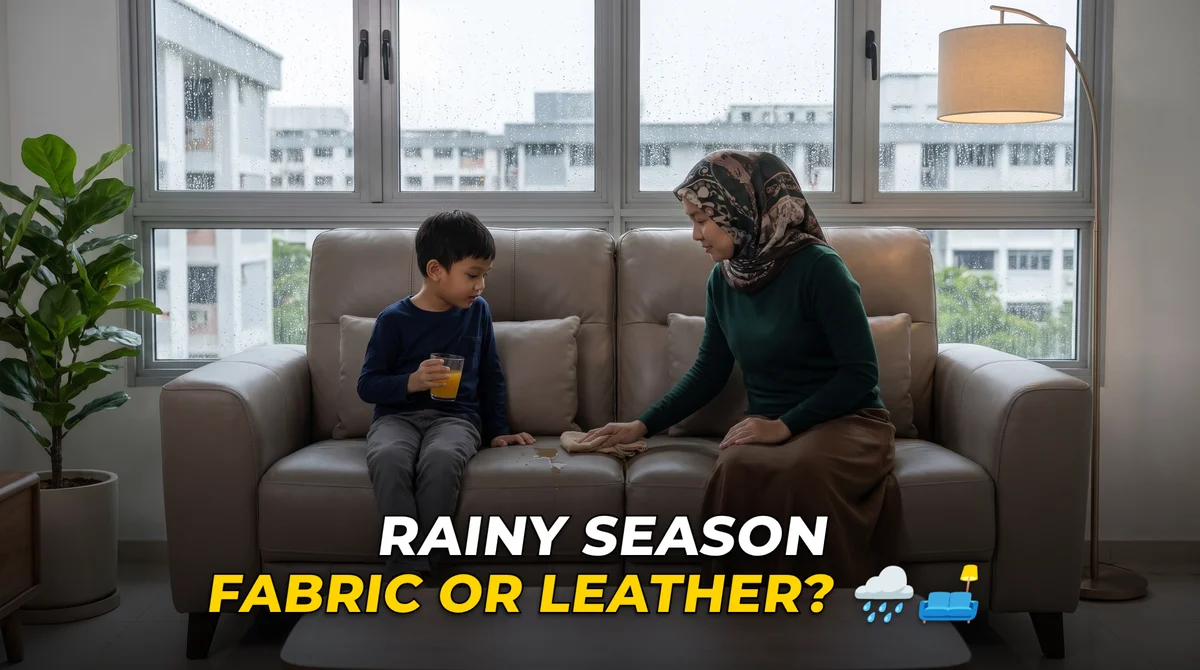
Your living room faces the rain side of the block. Through December and January the windows stay closed, the floor feels slightly damp underfoot by mid-afternoon, and the old fabric sofa has that faint musty smell you only notice when you come home. You're replacing it before the family arrives for Christmas or Chinese New Year, and the question is whether the new one should be fabric again or leather.
The problem
Singapore is humid all year, but the Northeast Monsoon is a different kind of humid. It's cooler, so people switch the aircon off. It's wetter, so windows stay shut. And it runs for weeks at a time, so a sofa sits in still, damp air far longer than it does in a normal month. That's when the differences between fabric and leather stop being about looks.
Fabric breathes, which is why it feels cooler to sit on, but that also means it takes in moisture from the air. In a shut room through a wet fortnight, fabric cushions can feel faintly damp and start to smell if they aren't aired. Spills that would dry in a day in August linger. Leather and half leather don't absorb moisture in the same way and wipe clean, but leather in a sealed, unventilated room is not immune. Mould will grow on a leather surface if the room is damp enough for long enough, and it shows more against a plain hide than it does buried in a weave.
Either way, mould and mildew from conditions in the home fall outside the sofa warranty. Upholstery on both fabric and leather sofas is covered for manufacturing defects for the first year with us, and neither covers what the weather does in a closed room.
Why it happens
Most sofa comparisons are written for a dry climate or for the average Singapore month. They talk about pets, children and how each material ages in the sun. The monsoon isn't in them because it's a few weeks a year. But those weeks are when a sofa is most likely to develop the smell or the spot that puts you off it for good.
What to do about it
If you choose fabric: pick a tighter weave and plan to air it
A dense, tightly woven fabric takes in less moisture than a loose, textured one and dries faster. Removable cushion covers help because you can take them off and hang them on a dry day. Look at the fabric sofas in our sofa collection and ask which ones have covers that come off. Then commit to two habits: open the windows for an hour on any dry morning, and keep the sofa a hand's width off the wall so air moves behind it. On the wettest weeks, an hour of aircon in dry mode does more for a fabric sofa than any spray.
If you choose leather or half leather: ventilate and wipe, don't seal
Half leather means real leather on the surfaces you sit on and touch, with a matching man-made material on the back and sides. It gives you leather's easy wipe-down where it matters. The Lazy Lounger Half Leather Recliner Sofa is built this way and suits a family room that gets used hard. Through the monsoon, wipe it down with a barely damp cloth once a week and let the room breathe. Avoid covering it with throws that trap moisture against the hide, and don't push the back panel against an exterior wall that sweats.
Either way: think about what's under the cushions
The frame and base carry a three year warranty with us, and they're wood and metal, which humidity affects too. Keep the sofa off a wet floor after mopping, and if your living room floods from a sudden downpour through an open window, dry the base before the cushions. Terms like half leather, leatherette and pocket coil are explained in our glossary if the labels are confusing.
Decide by how you live, then adjust for the weather
Children and pets push most families towards leather or half leather for the wipe-clean surface. People who sit for long evenings and dislike a surface that warms up under them lean towards fabric. Our earlier guide on leather vs fabric for Singapore homes covers that side in depth. Once you know which way you lean, the monsoon habits above are what keep either choice looking good in February.
Before you decide
- Which way does the living room face, and does it get cross-ventilation when the windows are open?
- Will the aircon run at night through December and January, or will the room stay shut and warm?
- For fabric: do the cushion covers come off, and how dense is the weave?
- For leather or half leather: is there space to keep the back off the exterior wall?
- Do you have somewhere to hang cushions on a dry day?
- Have you read what the upholstery warranty covers and what it excludes?
Questions people ask
Does leather get mouldy in Singapore's humidity?
It can, in a closed room that stays damp for weeks. Regular wiping and airing prevent it in almost every home. The problem is the room, not the leather.
Is fabric or leather cooler to sit on in humid weather?
Fabric feels cooler because it breathes. Leather warms up under you but doesn't hold moisture, so it feels less clammy on a damp day once you settle in.
Is mould on a sofa covered by warranty?
No. Mould and fungus from conditions in the home are excluded across the industry, including in our warranty policy. Manufacturing defects in upholstery are covered for the first year.
Message our showroom team on WhatsApp and tell us which way your living room faces and who sits on the sofa, and we'll point you to the fabric and half leather options that suit it. Or come and feel both at Sims Avenue or Labrador.